
Blog
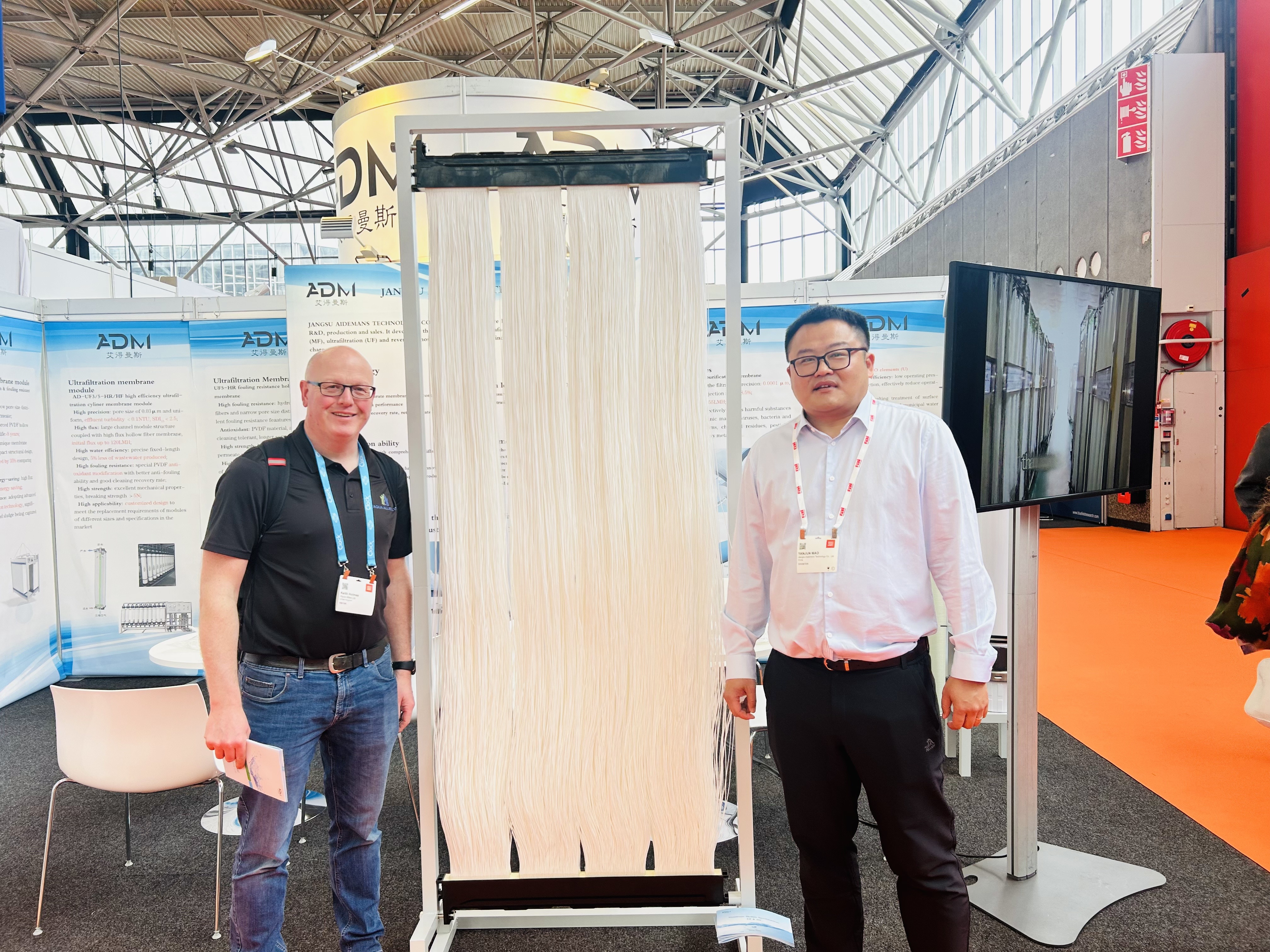
Curtain-type membrane module installation
Release time:
2025-04-22
I. Pre-installation Preparations
Site Survey and Design Confirmation
Inspection items include:
Whether there is sufficient installation space and sufficient space for operation and maintenance.
Whether the equipment's inlet and outlet water pipes, power supply, and control system are ready.
Confirm that the model and quantity of the membrane modules are consistent with the design drawings, and ensure that all accessories are complete.
Inspection and Acceptance of Membrane Modules
Inspection items include:
Whether the membrane fibers are damaged, broken, or contaminated.
Whether the frame and seals of the membrane module are intact.
Confirm that the model and specifications of the membrane module are consistent with the design requirements.
Preparation of Installation Tools and Materials
Installing a curtain-type membrane module requires some special tools and materials, including:
Basic tools such as wrenches, screwdrivers, and levels.
Installation materials such as sealing glue, gaskets, and bolts.
Lifting equipment (such as cranes, forklifts, etc.) for handling and positioning membrane modules.
II. Membrane Module Installation Steps
Handling and Positioning of Membrane Modules
The following points should be noted during handling:
Use special lifting devices to ensure that the membrane module is evenly stressed, avoiding excessive local stress that may cause deformation or damage.
Handle with care during handling to avoid collisions or vibrations.
Place the membrane module near the installation location and ensure that it is aligned with the installation bracket or frame.
Fixing and Installation of Membrane Modules
The specific steps are as follows:
Use a level to adjust the position of the membrane module to ensure that it is placed horizontally to avoid tilting that may cause unstable operation.
Use bolts to fix the membrane module to the bracket or frame to ensure that it is firmly fixed.
During installation, pay attention to the sealing of the membrane module, and use sealing glue or gaskets to ensure that there are no leaks at the joints.
Debugging and Acceptance after Installation
System Debugging
After installation, the system needs to be debugged to ensure that the membrane module operates normally.
Leakage Test
After system debugging, a leak test is required to ensure that there are no leaks in the membrane module and pipe connections.
Acceptance and Delivery
After debugging and testing, acceptance is required to ensure that the system meets the design requirements and operating standards.
Post-installation Maintenance and Maintenance
Regularly clean the membrane module to prevent membrane contamination.
Check the sealing and fixing of the membrane module and repair or replace it in time.
Monitor the operating parameters of the system and promptly identify and handle any abnormal situations.
Jiangsu Aidemans Technology Co., Ltd. focuses on R&D, production, and sales of fine ultrafiltration membranes and zero-discharge reverse osmosis membrane products in the field of industrial zero-discharge. The main products involved are ultrafiltration membranes, membrane modules, reverse osmosis membranes, microfiltration membranes, and membrane fibers. With a development strategy of “resource regeneration and green low carbon,” we support the reuse of valuable materials with industrial zero discharge, reduce carbon, nitrogen, and phosphorus emissions, focus on challenging technologies, and challenge market entry barriers, striving to become a specialized and sophisticated enterprise.
Related Content
Contact Information
Address: Room 603, Block C, Yuanhe Tang Science and Technology Culture Research and Development Community, 588 Xuanroad, Yuanhe Street, Xiangcheng District, Suzhou City
Telephone:0512-62808808
E-mail: jsadms@163.com