
Blog
What are the production processes of ultrafiltration membrane manufacturers?
Release time:
2025-04-28
1. Material Selection
Polymer materials: such as polyethersulfone (PES), polysulfone (PS), polyacrylonitrile (PAN), polyvinylidene fluoride (PVDF), etc. These materials have good chemical stability, mechanical strength, and heat resistance.
Inorganic materials: such as ceramics, metal oxides, etc. Inorganic membranes have higher heat resistance and chemical stability, but are more expensive.
The choice of material needs to consider the application environment of the membrane, the separation object, and the cost.
2. Membrane Preparation
Membrane preparation is the core step in ultrafiltration membrane production, mainly including the following methods:
Phase inversion method: This is the most commonly used membrane preparation method. The polymer is dissolved in a suitable solvent to form a uniform solution, and then phase separation is induced by a non-solvent (such as water) to form a porous membrane structure.
Immersion precipitation method: The polymer solution is coated on a substrate, and then immersed in a non-solvent. The solvent and non-solvent exchange, causing polymer phase separation to form a porous membrane.
Thermally induced phase separation method: The polymer solution is heated to a certain temperature and then cooled, using temperature changes to induce phase separation.
Evaporation induced phase separation method: By evaporating the solvent, the concentration of the polymer solution is increased, inducing phase separation.
Stretching method: Mainly used for preparing microporous membranes. A polymer film is stretched under specific conditions to form a microporous structure. This method is suitable for materials such as polypropylene (PP) and polytetrafluoroethylene (PTFE).
Sintering method: Polymer powder is sintered at high temperature to form a porous structure. This method is suitable for preparing inorganic membranes.
Electrospinning method: A high-voltage electric field is used to stretch the polymer solution or melt into nanofibers to form a fiber membrane. This method can prepare membranes with high specific surface area and porosity.
3. Quality Control
Quality control of ultrafiltration membranes is a key step in ensuring product performance consistency and reliability. Common quality control methods include:
Flux test: Determine the water flux of the membrane at different pressures and temperatures to evaluate the separation efficiency of the membrane.
Mechanical property test: Determine the mechanical properties of the membrane, such as tensile strength and elongation at break.
Biosecurity test: Ensure the safety and biocompatibility of the membrane in biomedical applications.
4. Post-treatment
After membrane preparation, a series of post-treatment steps are usually required to improve the performance and stability of the membrane:
Crosslinking treatment: Enhance the mechanical strength and chemical stability of the membrane through chemical crosslinking or radiation crosslinking.
Surface modification: Change the surface properties of the membrane, such as hydrophilicity, hydrophobicity, and anti-fouling properties, through chemical modification or physical treatment.
5. Differences in production processes among different manufacturers are mainly reflected in the following aspects:
Material research and development and process optimization: By cooperating with universities, some manufacturers can continuously optimize production processes and material research and development, transforming academic achievements into productivity.
Equipment and technological innovation: Some manufacturers will independently research and develop customized equipment, such as polishing equipment and high-temperature cleaning lines, to ensure the production quality of stainless steel cylinders.
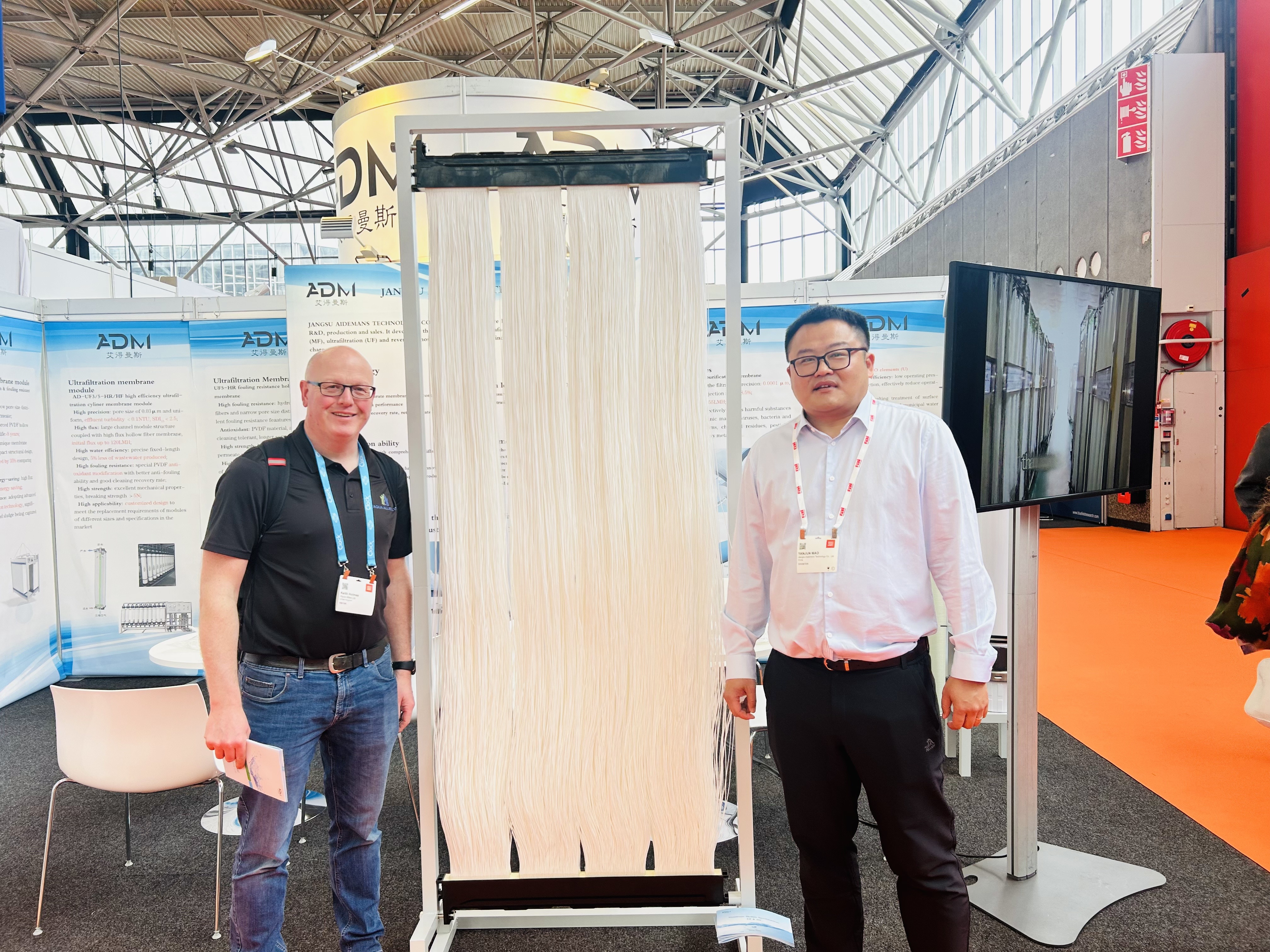
Jiangsu Aidermans Technology Co., Ltd. focuses on the research, development, production, and sales of fine ultrafiltration membranes and zero-discharge reverse osmosis membrane products in the industrial zero-discharge field. The main products involve ultrafiltration membranes, membrane components, reverse osmosis membranes, microfiltration membranes, and membrane filaments, etc. With a development strategy of "resource regeneration and green low carbon", it assists in the reuse of valuable materials from industrial zero-discharge, reduces carbon, nitrogen, and phosphorus emissions, focuses on challenging technologies, challenges the threshold market, and strives to become a specialized, sophisticated, and unique enterprise.
Previous Page:
: Next Page
Related Content
Contact Information
Address: Room 603, Block C, Yuanhe Tang Science and Technology Culture Research and Development Community, 588 Xuanroad, Yuanhe Street, Xiangcheng District, Suzhou City
Telephone:0512-62808808
E-mail: jsadms@163.com