
Blog
What is the working principle of a curtain-type membrane module?
Release time:
2025-04-22
I. Basic Structure of Curtain Membrane Modules
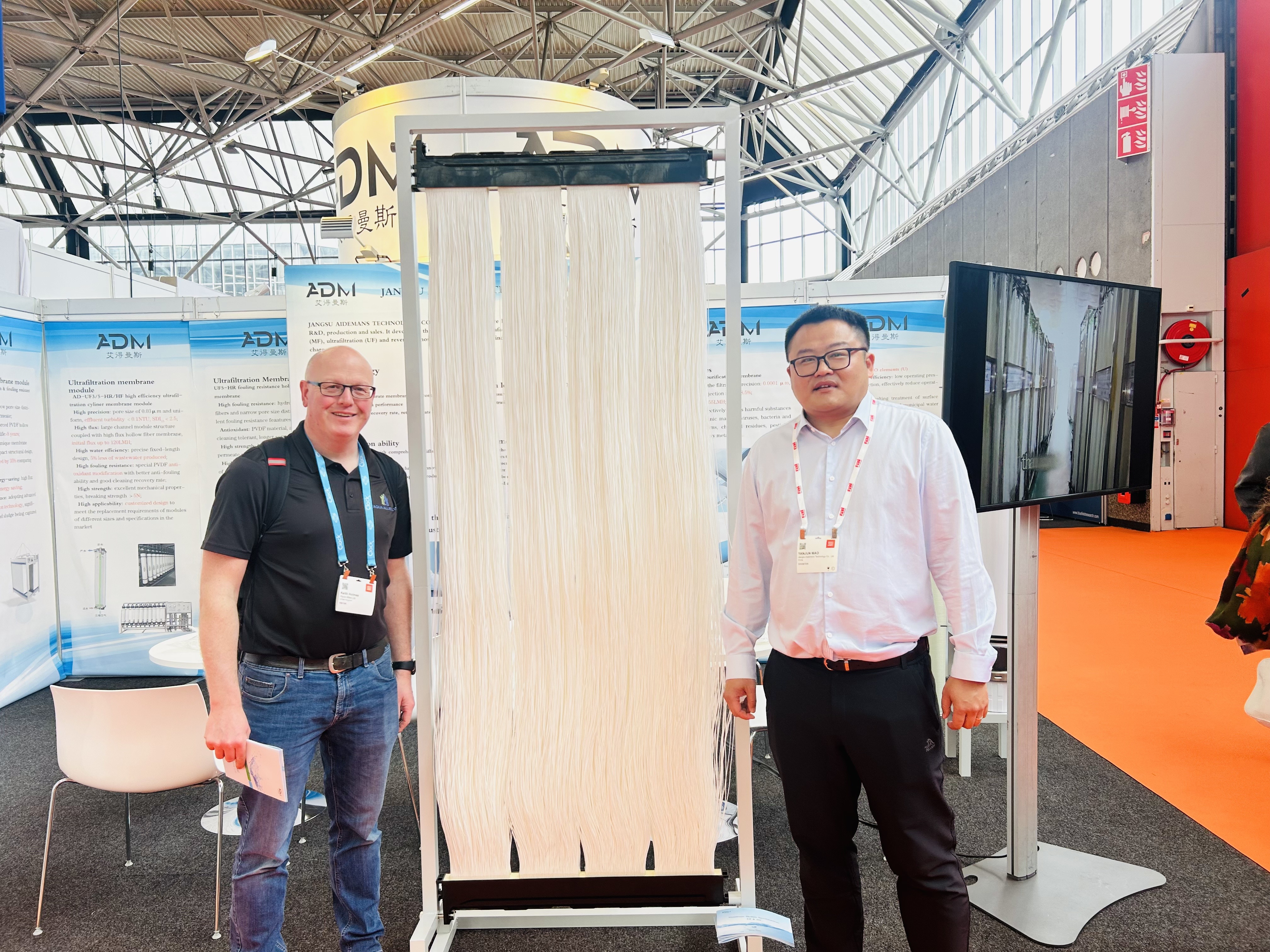
Curtain membrane modules typically consist of multiple membrane elements arranged in a curtain-like configuration, hence the name "curtain membrane." Each membrane element is composed of membrane fibers or sheets, with spaces between them forming channels for fluid flow.
The exterior of a curtain membrane module is usually enclosed by a support frame or housing to protect the membrane elements and provide mechanical support. The module typically has inlet and outlet ports at both ends for fluid entry and exit. Additionally, curtain membrane modules may be equipped with backwashing and air-scouring devices to extend membrane life and improve separation efficiency.
II. Working Principle of Curtain Membrane Modules
The working principle of curtain membrane modules is primarily based on membrane separation technology, with the core being the selective permeability of the membrane to achieve substance separation. Specifically, the operation of a curtain membrane module can be divided into the following steps:
Feed Liquid Delivery
The liquid to be treated (such as wastewater, seawater, etc.) enters the curtain membrane module through the inlet. The feed liquid flows inside the module, through the channels between the membrane fibers or sheets, gradually approaching the membrane surface.
Permeate Collection
The liquid that permeates the membrane (i.e., permeate) flows out through the internal channels of the membrane fibers or sheets and is finally discharged from the outlet. The permeate is usually purified water or a concentrated solution, depending on the application.
Concentrate Discharge
The substances retained by the membrane (i.e., concentrate) gradually accumulate on the membrane surface, forming a concentrate. The concentrate is discharged from the other end of the membrane module and usually requires further processing or recycling.
Membrane Cleaning and Maintenance
During long-term operation, pollutants may accumulate on the membrane surface, leading to a decrease in membrane flux. To maintain efficient membrane operation, curtain membrane modules are usually equipped with backwashing or air-scouring devices for regular cleaning to remove pollutants from the membrane surface.
Advantages of Curtain Membrane Modules
Advantages:
High-efficiency separation: Curtain membrane modules can achieve highly efficient substance separation and are suitable for various complex liquid systems.
Energy-efficient and environmentally friendly: The membrane separation process does not require the addition of chemical agents, reducing secondary pollution and lowering energy consumption.
High degree of automation: Curtain membrane modules can be combined with automated control systems for continuous and stable operation.
Small footprint: Compared to traditional water treatment processes, curtain membrane modules have a compact structure and small footprint.
Application Areas of Curtain Membrane Modules
Water treatment, wastewater treatment, seawater desalination, food and beverage industry, pharmaceutical and bioengineering.
Jiangsu Aidemans Technology Co., Ltd. focuses on R&D, production, and sales of fine ultrafiltration membranes and zero-discharge reverse osmosis membrane products in the industrial zero-discharge field. The company's main products include ultrafiltration membranes, membrane modules, reverse osmosis membranes, microfiltration membranes, and membrane fibers. With a development strategy of "resource regeneration and green low carbon," it promotes the reuse of valuable materials in industrial zero-discharge, reduces carbon, nitrogen, and phosphorus emissions, focuses on challenging technologies, and tackles high-barrier markets, striving to be a specialized, refined, and innovative enterprise.
Related Content
Contact Information
Address: Room 603, Block C, Yuanhe Tang Science and Technology Culture Research and Development Community, 588 Xuanroad, Yuanhe Street, Xiangcheng District, Suzhou City
Telephone:0512-62808808
E-mail: jsadms@163.com