
Blog
Can reverse osmosis membranes remove heavy metals?
Release time:
2025-04-15
I. Working Principle of Reverse Osmosis Membrane
A reverse osmosis membrane is a semi-permeable membrane with extremely small pores that can effectively intercept dissolved solids, ions, organic matter, and microorganisms in water.
The filtration mechanism of reverse osmosis membranes mainly includes the following aspects:
Sieving effect: The pore size of the membrane is extremely small, capable of blocking impurities with larger particle sizes.
Charge repulsion: The membrane surface carries a charge, which can repel ions with the same charge (such as heavy metal ions).
Dissolution and diffusion: Water molecules pass through the membrane much faster than other solutes, thus achieving separation.
II. Practical Application Effects
Drinking water purification: Tap water may contain trace amounts of heavy metals, such as lead and mercury. Reverse osmosis membranes can effectively remove these heavy metals, ensuring the safety of drinking water.
Industrial wastewater treatment: Wastewater discharged from industries such as electroplating, mining, and battery manufacturing usually contains high concentrations of heavy metals.
Seawater desalination: Reverse osmosis membranes can simultaneously remove these harmful substances during seawater desalination.
III. Heavy Metal Removal Mechanism
Heavy metals refer to metal elements with a density greater than 5 g/cm³. Heavy metals usually exist in water in ionic form and pose significant hazards to human health and the environment.
The mechanism by which reverse osmosis membranes remove heavy metals mainly includes the following points:
Sieving effect: The particle size of heavy metal ions is usually larger than the pore size of the reverse osmosis membrane, and therefore they are physically intercepted.
Charge repulsion: Heavy metal ions usually carry a positive charge, while the surface of the reverse osmosis membrane carries a negative charge. Due to charge repulsion, heavy metal ions find it difficult to pass through the membrane.
Adsorption: Some heavy metal ions may be adsorbed by the active sites on the membrane surface, further reducing their permeability.
IV. Working Principle and Application Scenarios of Permeation Membranes
The working principle of a reverse osmosis membrane is to apply pressure to the water, causing the water to permeate the membrane in reverse. Because the pore size of the membrane is very small, only water molecules can pass through; other impurities, including heavy metal ions, bacteria, and viruses, will be filtered out and discharged from the wastewater pipe.
Reverse osmosis membranes are not only suitable for household water purification equipment but also have wide applications in industrial wastewater treatment, groundwater purification, and other fields.
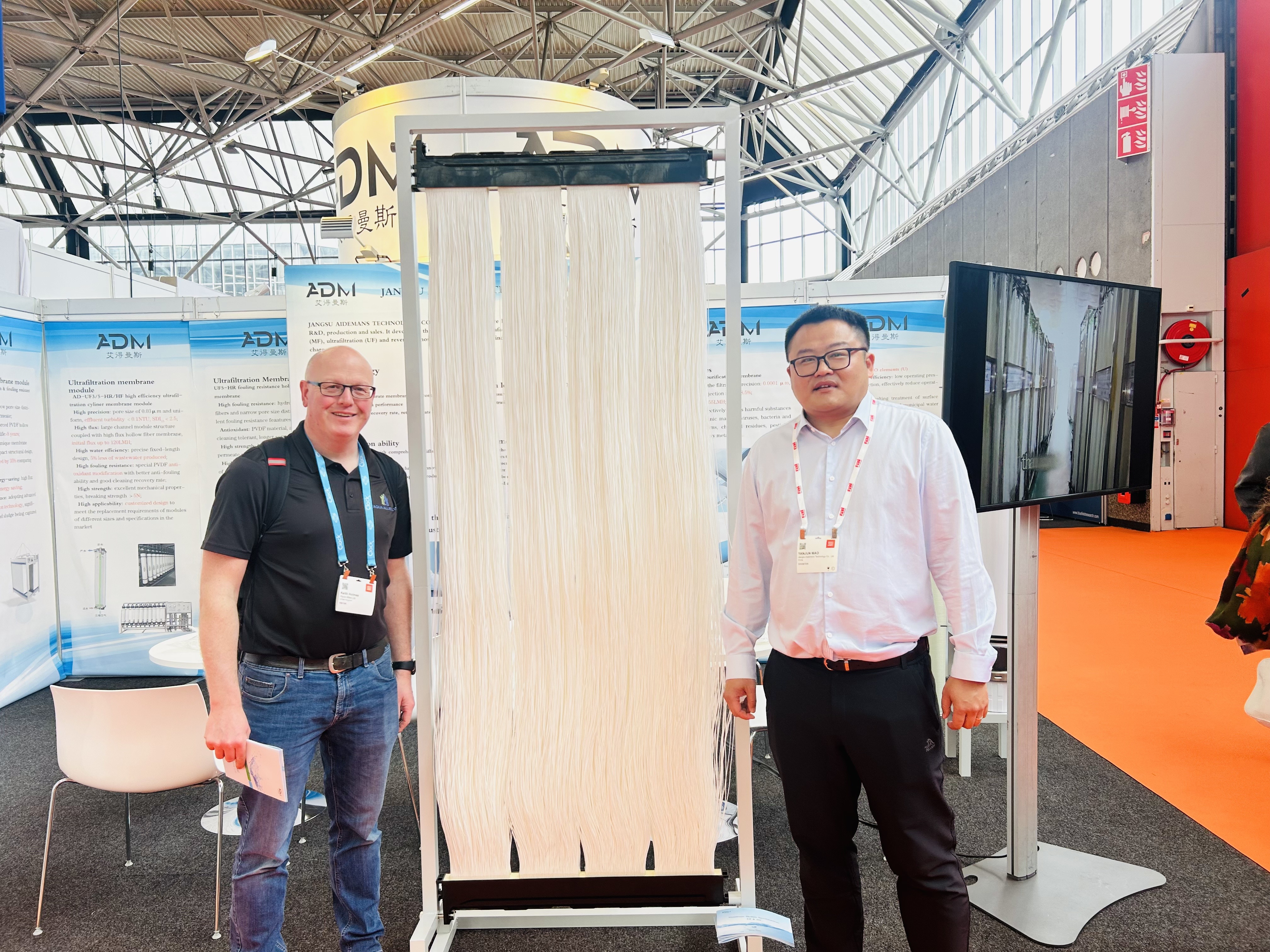
Jiangsu Aidemans Technology Co., Ltd. focuses on R&D, production, and sales of fine ultrafiltration membranes and zero-discharge reverse osmosis membrane products in the field of industrial zero-discharge. The main products include ultrafiltration membranes, membrane modules, reverse osmosis membranes, microfiltration membranes, and membrane fibers. With a development strategy of "resource regeneration and green low-carbon," it supports the reuse of valuable materials in industrial zero-discharge, reduces carbon, nitrogen, and phosphorus emissions, focuses on challenging technologies, challenges high-threshold markets, and strives to become a specialized, refined, and new leading enterprise.
Related Content
Contact Information
Address: Room 603, Block C, Yuanhe Tang Science and Technology Culture Research and Development Community, 588 Xuanroad, Yuanhe Street, Xiangcheng District, Suzhou City
Telephone:0512-62808808
E-mail: jsadms@163.com